When is it safe to mow a drought stressed lawn during a summer watering restriction?
During a dry spell the lawn stops growing but the recurring schedule keeps arriving. Here is how to tell dormant grass from dying grass, how the mowing rules change, and what to do with the visit and the invoice.
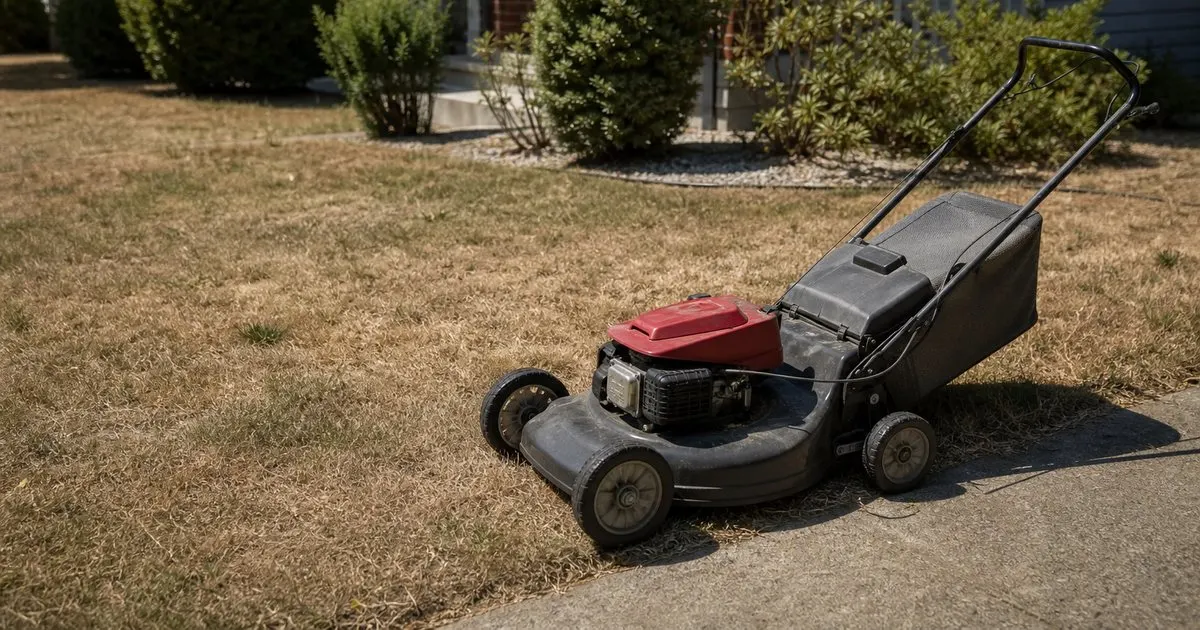
Learn to tell dormant grass from grass that is actually dying
Cool season lawns protect themselves in a dry summer by going dormant. The blades brown off and growth stops, but the crowns stay alive underground and green up again when consistent moisture returns. Dying turf looks similar from the street, which is why so many customers panic in July. The usual field checks are simple. Dormant turf browns fairly evenly across an area, and the crowns at the base of the plant are still firm and slightly pale green rather than brittle. Grass that pulls out of the soil with almost no resistance, in patches with irregular edges, is more likely dealing with insects or disease than with drought.
The check that matters most for scheduling is the footprint test. Walk across the lawn and look back. Well hydrated turf springs back within a minute or two. Stressed turf holds your footprints, and crisp turf that crunches underfoot is telling you that the blades will fracture rather than bend. That single observation, made from the driveway in about fifteen seconds, is a better guide to whether this visit should include a cut than anything you decided on Monday when you built the route. Related: What is the best way to route a lawn crew across many properties?
Keep reading: How often should you mow a residential lawn during peak growing season?, What is the best way to route a lawn crew across many properties?, Why does mowing height matter so much for a healthy summer lawn?. See how LawnCadence helps you recurring lawn care scheduling and crew routing.
What changes about the cut when the lawn has stopped growing
Raise the deck first. Under heat and moisture stress, a taller canopy shades the soil, keeps root zone temperature down, and slows evaporation, which is exactly the help the plant needs. For most cool season lawns that means moving toward the upper end of the range the grass tolerates, commonly around three and a half to four inches, and staying there until the weather breaks. Never take the lawn down to a summer height in a single pass either. The old rule about removing no more than roughly a third of the blade in one cut matters more in drought than at any other time of year, because every extra inch removed is canopy the plant cannot rebuild without water. Related: Why does mowing height matter so much for a healthy summer lawn?
Then change everything around the cut. Sharpen blades more often, since a dull blade tears dry leaf tips and leaves a whitish frayed edge that makes a stressed lawn look worse for days. Mow in the cooler part of the day rather than mid afternoon. Vary your mowing pattern and avoid tight turns on crisp turf, because wheel traffic on dormant grass causes visible tracking that can persist for weeks. Leave the clippings if the volume is light, since they return moisture and nutrients rather than adding thatch. And if the turf crunches and there is simply nothing to remove, the professional call is to skip the cut, trim the edges, blow the hard surfaces, and leave the lawn alone. Related: How often should you mow a residential lawn during peak growing season?
How to handle the schedule and the invoice during a restriction
The billing question is what makes drought weeks uncomfortable, so settle it before the dry spell arrives. Broadly there are three honest models. Some operators stretch the interval during dormancy and bill only the visits performed, which customers understand instantly but which puts a hole in your summer cash flow. Some hold the cadence and perform a reduced service visit, trimming, edging, blowing, and inspecting for insect damage, billed at a reduced rate. Others run a flat seasonal contract where the customer pays the same amount every month and the visit count naturally rises and falls with growth. All three work. The one that fails is deciding week by week without telling anyone.
Whichever model you use, the exception has to be visible. A skipped or reduced visit with no explanation looks exactly like a crew that did not show up, and it generates the phone call that costs more than the visit was worth. Log the reason on the property, note what was actually performed, and send a short message the same day. Customers accept dormancy far more easily than they accept silence, and an operator who explains why the lawn should not be cut this week reads as an expert rather than as someone looking for a reason to skip work.
Getting back on cadence when the rain finally returns
Recovery is fast and it will catch you out. After a meaningful soaking, dormant cool season turf can green up within a couple of weeks and then grow hard, especially if temperatures have moderated. The route that was comfortably stretched to ten or fourteen days in August suddenly needs weekly service again, and every property on it needs that change at the same time. Watch the forecast rather than the lawns, because by the time the grass is obviously long you are already a week behind across the whole book of business. Related: When should you reschedule lawn service because of rain and wet grass?
Bring the height down gradually rather than in one corrective cut. Two or three visits stepping the deck back toward normal height, each still respecting the one third guideline, will look better and stress the plant far less than scalping a lawn that just spent six weeks in survival mode. Set expectations with customers at the same time, because a lawn coming out of dormancy is uneven and often shows weed pressure where the turf thinned. It is worth one message explaining that the patchiness will fill in, and that early fall, when soil is still warm and rain is more reliable, is the moment to talk about overseeding rather than mid drought.
- Use the footprint test at the curb: turf that holds footprints or crunches underfoot should not get a normal cut.
- Raise the deck toward the top of the tolerated range, sharpen blades more often, and mow in the cooler hours.
- Pick one billing model for dormancy weeks before the dry spell starts and apply it to every customer.
- Watch the forecast, not the lawns, so the whole route returns to weekly cadence before the grass gets ahead of you.

Julien Jimenez
Julien Jimenez is an independent software builder based in Paris. He designs, ships, and operates focused SaaS products for small businesses and independent professionals. Read the full author page.
Keep Every Crew On Cadence
Recurring lawn care scheduling and crew routing. LawnCadence is built to help you put this into practice.
Start free trialMore from the LawnCadence blog
How often should you mow a residential lawn during peak growing season?
What is the best way to route a lawn crew across many properties?
Why does mowing height matter so much for a healthy summer lawn?
Get the LawnCadence playbook
Practical guides on lawn care software, straight to your inbox as we publish them. No spam, unsubscribe any time.