When should you reschedule lawn service because of rain and wet grass?
How to decide when to mow through weather and when to push the day, and how to reflow the week.
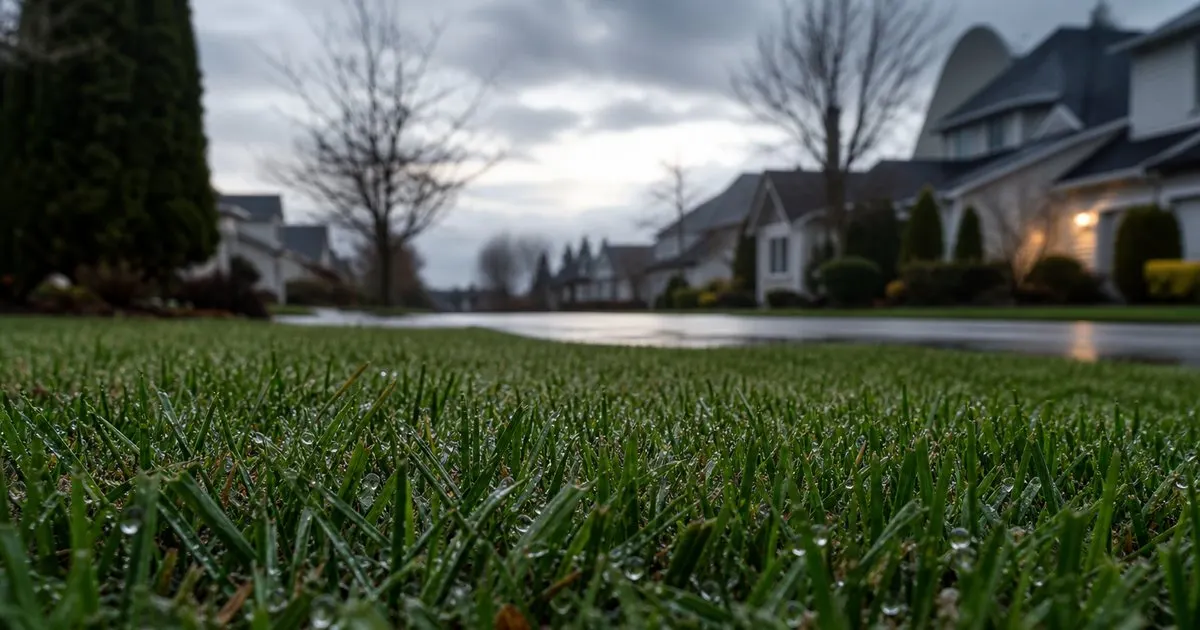
Push the day when the ground is saturated enough to rut, when heavy rain is actively falling, or when soggy grass would tear and clump instead of cutting clean. A light drizzle on firm turf is usually fine. When you move a day, slide those stops to the next dry slot.
Know why wet mowing is a problem
Mowing saturated grass is bad for the lawn and the equipment. Wet clippings clump and mat, smothering the lawn and leaving an uneven cut, and mowers rut soft soil and can slip on slopes. Wet grass also spreads disease more easily, so a crew that mows through a downpour can leave a lawn worse than it found it. Related: How often should you mow a residential lawn during peak growing season?
There is a difference between morning dew and a soaked lawn, though. Light moisture usually mows fine once it burns off, while ground that squishes underfoot is a clear signal to wait.
Keep reading: How often should you mow a residential lawn during peak growing season?, What is the best way to route a lawn crew across many properties?, Why does mowing height matter so much for a healthy summer lawn?. See how LawnCadence helps you recurring lawn care scheduling and crew routing.
Read the day, not just the forecast
The decision is about the lawn's condition at mow time, not the forecast from yesterday. A morning storm that clears by noon may leave lawns dry enough to cut by afternoon, so shifting stops later in the day can save the whole route. Only when the ground stays saturated does the day truly need to move. Related: What is the best way to route a lawn crew across many properties?
Judgment here protects both the lawns and the schedule. Pushing every drizzle wastes days, while forcing a route through standing water damages properties and invites callbacks.
Reflow the week, do not just skip
When a day does need to move, the goal is to reschedule, not to skip. A skipped mow means the grass grows another week and the next cut violates the one-third rule. Push the rained-out route to the next working day and let the following days shift so every lawn still gets cut close to its cycle. Related: Why does mowing height matter so much for a healthy summer lawn?
This is where a rain day becomes a logistics problem. Moving twenty lawns forward reshuffles the whole week, and doing it by hand with phone calls is where crews lose time and drop properties.
Make rescheduling one action
The difference between a smooth rain day and a lost one is how fast you can reflow the schedule. When moving a day is a single action that reorders the affected properties, a washout becomes a minor adjustment instead of a morning of frantic calls.
LawnCadence lets you push a rained-out route forward in one tap and reflows the week so no property drops out of rotation, turning weather from a crisis into a quick adjustment. Related: What weather signals should trigger a lawn care rescheduling decision each week?
- Wet mowing damages lawns, soil, and cut quality.
- Judge the lawn at mow time, not the old forecast.
- Reschedule rather than skip to protect the cycle.
- Make pushing a rain day a single, fast action.

Julien Jimenez
Julien Jimenez is an independent software builder based in Paris. He designs, ships, and operates focused SaaS products for small businesses and independent professionals. Read the full author page.
Frequently asked questions
Why is mowing wet grass a problem?
Wet blades tear rather than cut cleanly, clump and clog the deck, and can spread disease. Mower tires also compact soft ground and leave ruts that scar the lawn.
How do you reflow a week after a rain day?
Shift the rained-out route to the next open day and cascade the following days forward, keeping each cluster intact. Communicate the new day to customers so no one is surprised by a shifted visit.
Keep Every Crew On Cadence
Recurring lawn care scheduling and crew routing. LawnCadence is built to help you put this into practice.
Start free trialMore from the LawnCadence blog
How often should you mow a residential lawn during peak growing season?
What is the best way to route a lawn crew across many properties?
Why does mowing height matter so much for a healthy summer lawn?
Get the LawnCadence playbook
Practical guides on lawn care software, straight to your inbox as we publish them. No spam, unsubscribe any time.