What is the best way to route a lawn crew across many properties?
How to order stops and cut drive time so a crew mows more lawns in a day with less windshield time.
Group properties by neighborhood and assign each area a set day so the crew mows a tight cluster instead of crossing town. Sequence stops to flow in one direction, minimizing backtracking, and keep the same route weekly so the crew learns each yard. Dense, repeatable routes cut drive time most.
Order stops by geography
The most productive lawn route moves in one continuous direction through an area rather than jumping around. Order the day so the crew finishes one neighborhood before starting the next, which cuts the drive time and the fuel that eat into a mowing day. A crew that crisscrosses town mows fewer lawns for more miles. Related: How often should you mow a residential lawn during peak growing season?
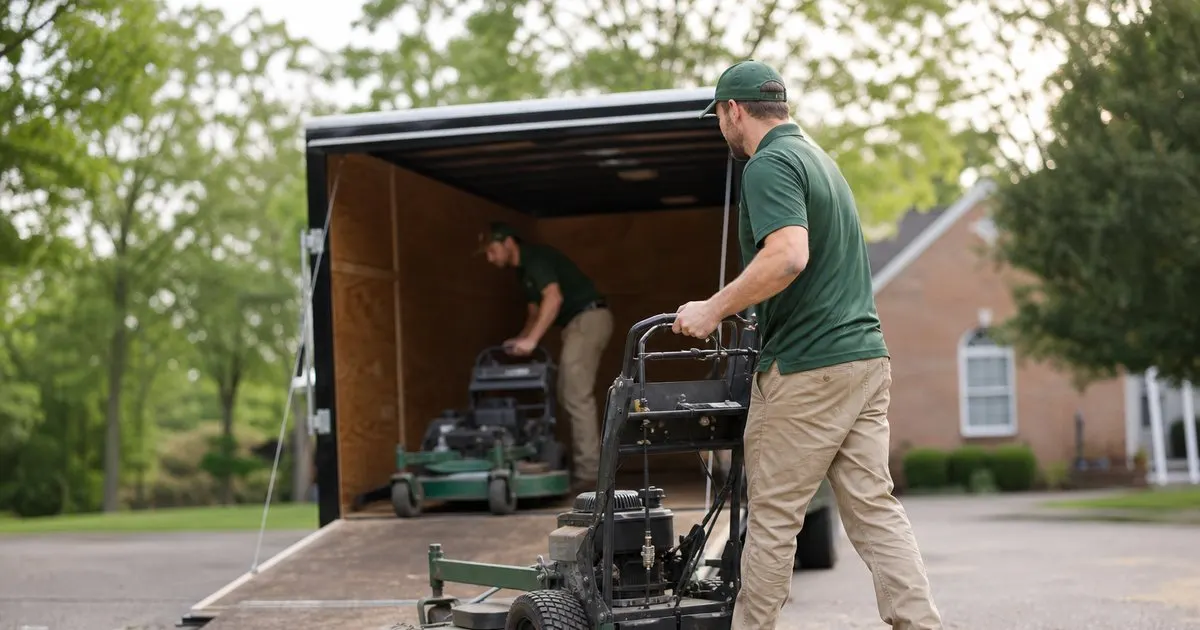
The trailer makes this even more important than in other trades. Loading and unloading equipment takes time, so a route that keeps stops close together lets the crew flow from lawn to lawn with minimal setup between them.
Keep reading: How often should you mow a residential lawn during peak growing season?, Why does mowing height matter so much for a healthy summer lawn?, When should you reschedule lawn service because of rain and wet grass?. See how LawnCadence helps you recurring lawn care scheduling and crew routing.
Build tight clusters per day
Density beats distance. A day built around a tight cluster of nearby lawns is far more profitable than the same number of lawns scattered across the service area. When assigning properties to days, group them geographically so each day is a compact loop.
This shapes how you take on new work. A new lawn that sits within an existing cluster strengthens the route, while one far outside it can cost more in drive time than it earns and may belong on a different day.
Account for property size and access
Not every lawn takes the same time, and a route that ignores this runs long. A large property with heavy trimming eats an hour, while a small townhouse strip takes minutes. Estimate time per property so the day is realistic and the last customer is not pushed to dusk. Related: What should a lawn crew do when a property has changed since last visit?
Access matters too. A gated backyard, street parking, or a locked side gate adds minutes, and knowing that ahead of time keeps the schedule honest rather than optimistic.
Keep the route in one place
A route the crew can actually see beats one in the lead's head. When the day's stops, their order, and the notes for each live on a shared sheet, any crew member can run the route and nothing gets skipped because the one person who knew the plan is off today. Related: How do you keep per property notes useful for every lawn crew member?
LawnCadence orders each crew's stops by drive time and keeps the property notes attached, so the crew works a tight, logical loop and spends the day mowing rather than doubling back across the map. Related: Which recurring lawn care schedule works best for cool season grasses?
- Order the day to move through one area at a time.
- Build tight geographic clusters per day.
- Estimate time by property size and access.
- Keep the route on a shared sheet the whole crew can see.

Julien Jimenez
Julien Jimenez is an independent software builder based in Paris. He designs, ships, and operates focused SaaS products for small businesses and independent professionals. Read the full author page.
Frequently asked questions
Why keep the same route every week?
Repetition lets the crew memorize gate codes, obstacles, and the quirks of each yard, so they work faster and make fewer mistakes. A predictable schedule also sets clear expectations for customers.
How do you handle a new customer far from your clusters?
Fit them into the nearest route day even if it is a slight stretch, and aim to add nearby accounts over time. A single distant stop is only worth the drive if the pricing or growth potential justifies it.
Keep Every Crew On Cadence
Recurring lawn care scheduling and crew routing. LawnCadence is built to help you put this into practice.
Start free trialMore from the LawnCadence blog
How often should you mow a residential lawn during peak growing season?
Why does mowing height matter so much for a healthy summer lawn?
When should you reschedule lawn service because of rain and wet grass?
Get the LawnCadence playbook
Practical guides on lawn care software, straight to your inbox as we publish them. No spam, unsubscribe any time.