How do you prevent locked gates and blocked driveways from wrecking a recurring mowing route?
Access failures are one of the quietest profit leaks in recurring lawn care. Here is how to capture access details up front, give crews one rule for the moment they are locked out, and fix the properties that fail again and again.
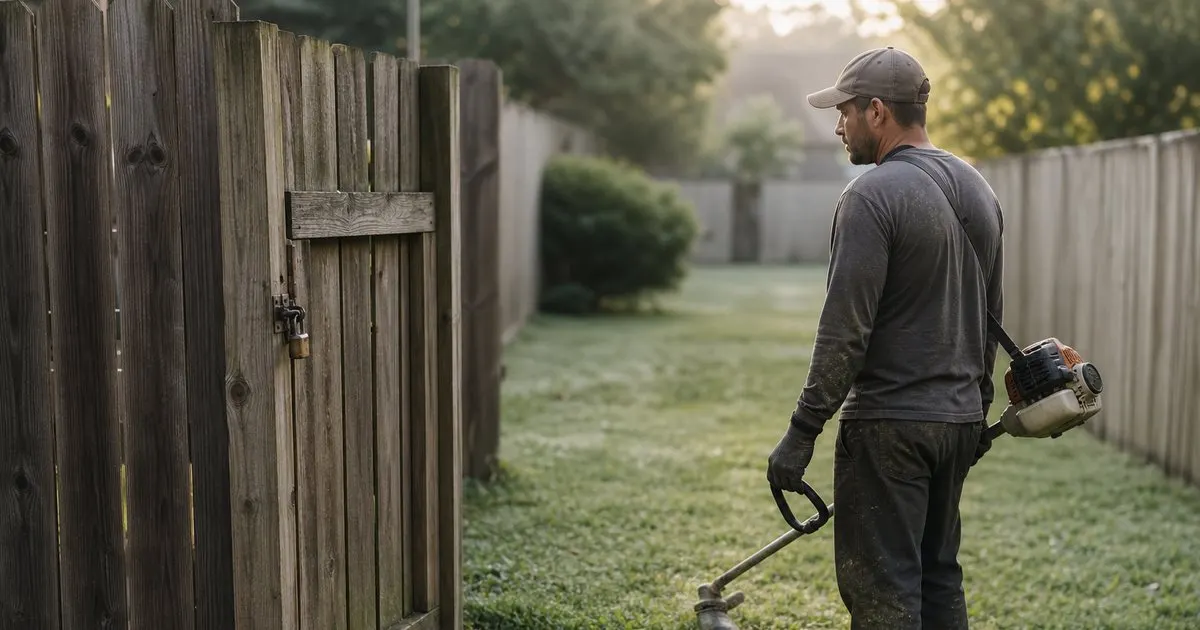
A locked gate costs far more than the cut you missed
The obvious loss is one backyard. The real loss is the buffer. A two person crew that pulls up, walks the side yard, tries the latch, knocks on the door, calls the office, waits for someone to reach the customer, and then loads back up can burn ten to fifteen minutes without cutting a blade of grass. That time does not come out of nowhere. It comes out of the slack you were counting on to absorb a heavy lawn at stop nine and traffic on the way to stop fourteen. One access failure in the morning is usually why the crew is working in low light at the end of the day. Related: What is the best way to route a lawn crew across many properties?
There is a second cost that never shows up on a timesheet. The customer comes home to a trimmed front yard and a shaggy backyard and draws the only conclusion available to them, which is that the crew got lazy or ran out of time. Unless someone told them the gate was locked before they saw it, you are now defending the visit instead of billing it. Access problems are cheap to prevent and expensive to explain after the fact, which is exactly why they deserve a real process instead of a note somebody remembers to read.
Keep reading: How often should you mow a residential lawn during peak growing season?, What is the best way to route a lawn crew across many properties?, Why does mowing height matter so much for a healthy summer lawn?. See how LawnCadence helps you recurring lawn care scheduling and crew routing.
Capture access details at signup, not after the first failure
Most operations learn a property the hard way, one surprise at a time. A better habit is to close the access questions during the estimate walk, while you are already standing in the yard. Which side is the gate on, and does it latch or lock. Is there a code, and who changes it. Is there a dog, is it inside during service hours, and who puts it there. Where does the trailer park without blocking a neighbor or a mail carrier. Is there a day of the week when cars, trash bins, or a contractor truck fill the driveway. None of that takes more than two minutes to ask when you are face to face, and it is nearly impossible to collect later by text.
Then store the answers as short structured fields on the property record, not as a paragraph buried in a note. Crews read fields. They skim paragraphs and miss the one sentence that mattered. Gate side, latch type, code, dog status, parking spot, best day to avoid. Keep every entry to a handful of words and have the first crew that services the property confirm each one, because customers describe their own yards from memory and are wrong more often than you would expect. A field that was verified on site is worth ten that were typed at a desk.
Give the crew one standing rule for the moment access fails
Crews stall when the rule is unclear. Left to improvise, one crew leader waits fifteen minutes and calls twice, another cuts the front and leaves silently, and a third skips the property entirely without telling anyone. Pick one sequence and train it. A workable version looks like this: try the gate and knock once, spend no more than a couple of minutes, photograph the closed gate or the blocked driveway, service every area you can legally and safely reach, report the exception from the driveway before you pull away, and move to the next stop. The photo matters because it converts a disputed claim into a documented visit. Related: When should you reschedule lawn service because of rain and wet grass?
Decide the money question before it happens, not during an argument. Write into the service agreement what a partial visit costs and what an access denial costs, and use plain language. Many operators bill full price when the crew arrived and the customer blocked access, bill a reduced amount for a front only visit, and waive the charge the first time as goodwill while making it clear the policy applies from then on. Any of those positions is defensible. What is not defensible is deciding case by case, because customers talk to each other and inconsistency reads as improvisation. Related: How much should a lawn care business charge for a recurring mowing plan?
Treat repeat access failures as a routing problem, not a customer quirk
One failure is an event. Three failures at the same address across a season is a pattern, and patterns have fixes. Pull a monthly list of properties that logged an access exception and look for the cause rather than the excuse. A gate that is locked every visit usually means the customer works during your window, which a lockbox or a keyed latch solves permanently. A driveway that is always full often means you scheduled them on trash day or the day the housekeeper parks there. Moving that property to a different day of the week can end the problem without a single difficult conversation. Related: How often should you mow a residential lawn during peak growing season?
Some properties will not be fixed, and that is a pricing decision. A stop that fails one visit in four is not really a weekly customer, it is a three quarter customer that consumes a full slot in your route density. You can move them to a route day where the drive penalty is smaller, add a modest access surcharge that funds the wasted trips, or let them go and give the slot to someone whose backyard is actually reachable. The point is to make that choice deliberately with the exception log in front of you, instead of absorbing the cost quietly for another full season.
- An access failure costs the schedule buffer, not just the stop, which is why late afternoons run long.
- Ask the gate, dog, and parking questions during the estimate walk and store the answers as short verified fields.
- Train one standing sequence: brief attempt, photo, service what you can reach, report from the driveway, move on.
- Review access exceptions monthly and fix the cause by changing the day, the latch, the price, or the customer.

Julien Jimenez
Julien Jimenez is an independent software builder based in Paris. He designs, ships, and operates focused SaaS products for small businesses and independent professionals. Read the full author page.
Keep Every Crew On Cadence
Recurring lawn care scheduling and crew routing. LawnCadence is built to help you put this into practice.
Start free trialMore from the LawnCadence blog
How often should you mow a residential lawn during peak growing season?
What is the best way to route a lawn crew across many properties?
Why does mowing height matter so much for a healthy summer lawn?
Get the LawnCadence playbook
Practical guides on lawn care software, straight to your inbox as we publish them. No spam, unsubscribe any time.