When should a lawn care business stop weekly mowing and switch to fall cleanup?
The end of mowing season is a transition, not a date. Here is how to read the lawn, restructure routes, and keep customers through winter.
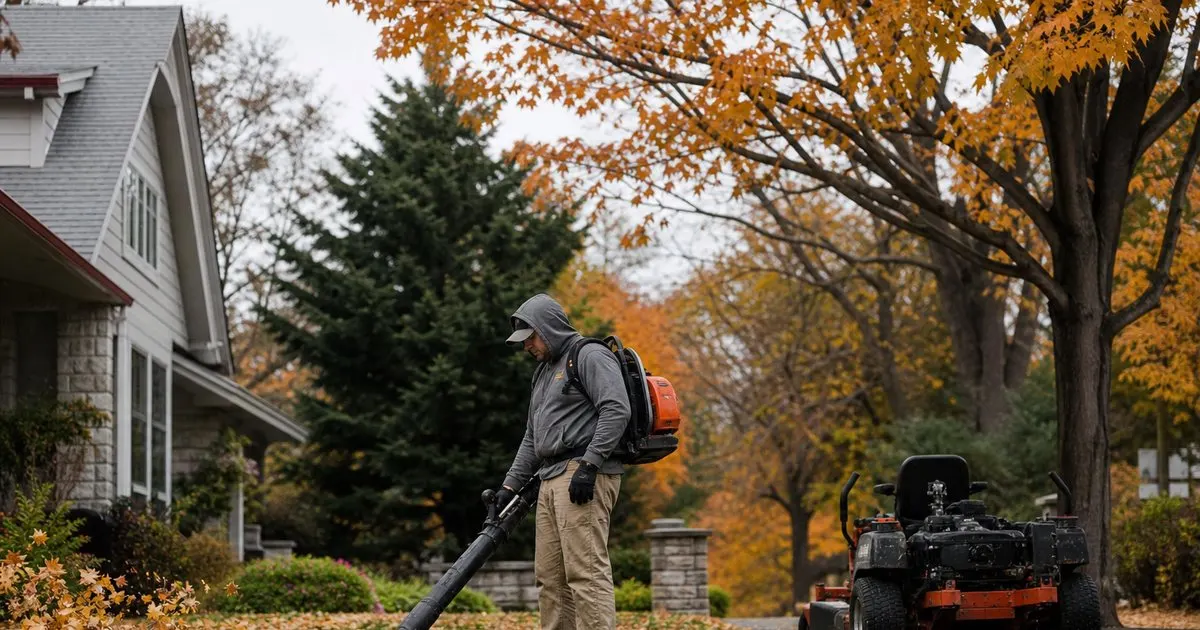
Read the grass, not the calendar
Cool season grasses keep growing well into fall and slow as soil temperatures drop, with the final mow typically falling after growth has essentially stopped but before the ground is frozen or covered. Warm season grasses go dormant earlier as nights cool and the turf turns tan. In either case the crew sees it first: stops get faster, clippings get lighter, and by late season a weekly cut is removing very little. Related: Which recurring lawn care schedule works best for cool season grasses?
A practical trigger is two or three consecutive visits where the mow is barely necessary and the bulk of the stop is leaf handling. That is the signal to move from weekly mowing to a cleanup cadence. Trying to run a rigid end date across all properties ignores that shaded, irrigated, or heavily fertilized lawns often keep growing weeks longer than their neighbors. Related: How often should you mow a residential lawn during peak growing season?
Keep reading: How often should you mow a residential lawn during peak growing season?, What is the best way to route a lawn crew across many properties?, Why does mowing height matter so much for a healthy summer lawn?. See how LawnCadence helps you recurring lawn care scheduling and crew routing.
Get the final mows right
The last cuts of the season matter more than people think. For cool season lawns, gradually bringing the height down over the final few mows helps limit matting and disease under snow, but cutting too short in one step stresses the turf. Keep the one-third rule in play and use the last two or three visits to step down. For warm season lawns going dormant, avoid scalping and leave enough leaf to protect the crowns. Related: Why does mowing height matter so much for a healthy summer lawn?
Mulching leaves into the turf on the final mows works well when leaf volume is moderate and the mower can chop them fine enough to disappear into the canopy. When volume is heavy, the mower becomes a leaf tool and the stop time balloons. That is when the visit is really a cleanup visit and should be scheduled and priced as one.
Restructure the route for cleanup work
Fall cleanup is a different kind of route. Stops are longer, less predictable, and heavily driven by which trees dropped this week. A weekly mowing route with thirty stops may become a cleanup route with a dozen. The mistake is to keep running the mowing route and add leaves on top of it. The day runs long and the quality suffers everywhere.
Build a separate cleanup schedule with realistic stop times based on tree cover and lot size, and move properties onto it as they transition. Some customers want leaves handled every week during peak drop. Others are fine with two or three larger cleanups. Setting that expectation at the start of fall, with a price per visit or a flat fall package, avoids the argument in November.
Keep the customer relationship through winter
The end of mowing does not have to be the end of contact. Confirm the final mowing visit in writing, thank the customer, and set expectations for cleanup and any winter services you offer, such as gutter clearing or snow removal. Then tell them when spring service resumes and how the first visit works. Customers who hear a clear plan tend to renew without a second thought. Related: When should you reschedule lawn service because of rain and wet grass?
Use the slower weeks to review the season: which properties ran over their estimated time, which routes drifted, and which customers skipped often. Fix the estimates, rebuild the routes for spring, and adjust pricing where the numbers say it is needed. The quiet season is when the next busy season is either set up well or left to chance.
- Stop weekly mowing when consecutive visits show growth has essentially stopped and leaf handling dominates the stop.
- Step mowing height down gradually on cool season lawns and never scalp in one visit.
- Run fall cleanup as its own route with its own stop times, not as an add-on to mowing.
- Confirm the final visit in writing, set spring expectations, and use the quiet season to fix estimates.

Julien Jimenez
Julien Jimenez is an independent software builder based in Paris. He designs, ships, and operates focused SaaS products for small businesses and independent professionals. Read the full author page.
Keep Every Crew On Cadence
Recurring lawn care scheduling and crew routing. LawnCadence is built to help you put this into practice.
Start free trialMore from the LawnCadence blog
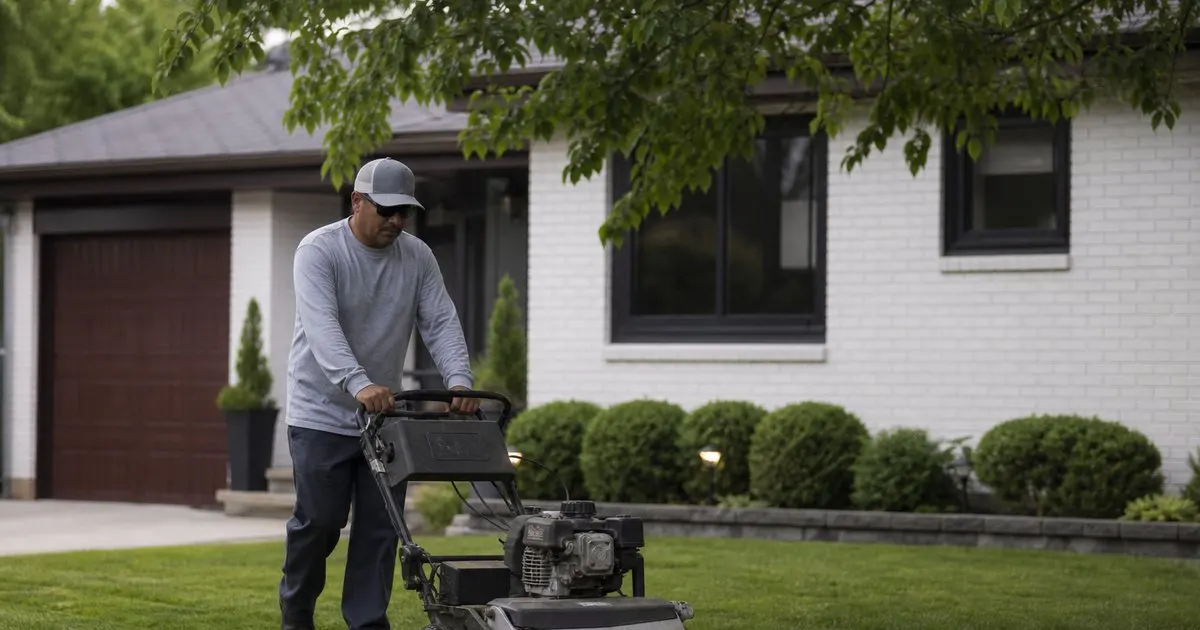
How often should you mow a residential lawn during peak growing season?
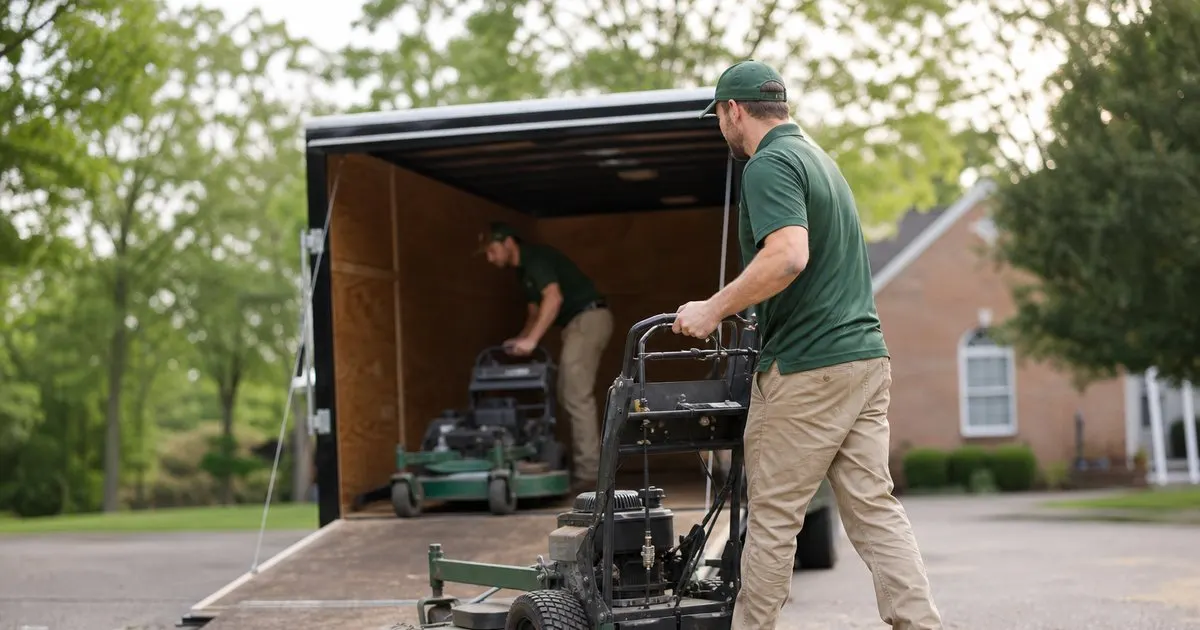
What is the best way to route a lawn crew across many properties?
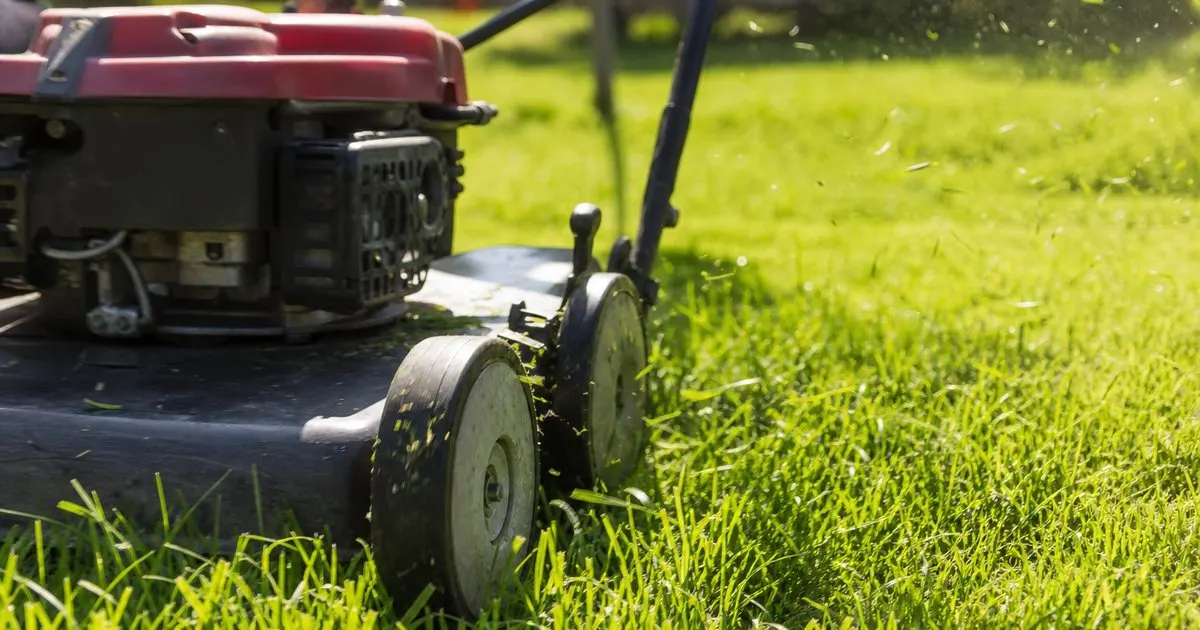
Why does mowing height matter so much for a healthy summer lawn?
Get the LawnCadence playbook
Practical guides on lawn care software, straight to your inbox as we publish them. No spam, unsubscribe any time.