When should a lawn care business move customers from weekly to biweekly mowing?
Growth slows, customers ask about savings, and the route needs a plan. Here is how to time the switch so lawns and margins both hold up.
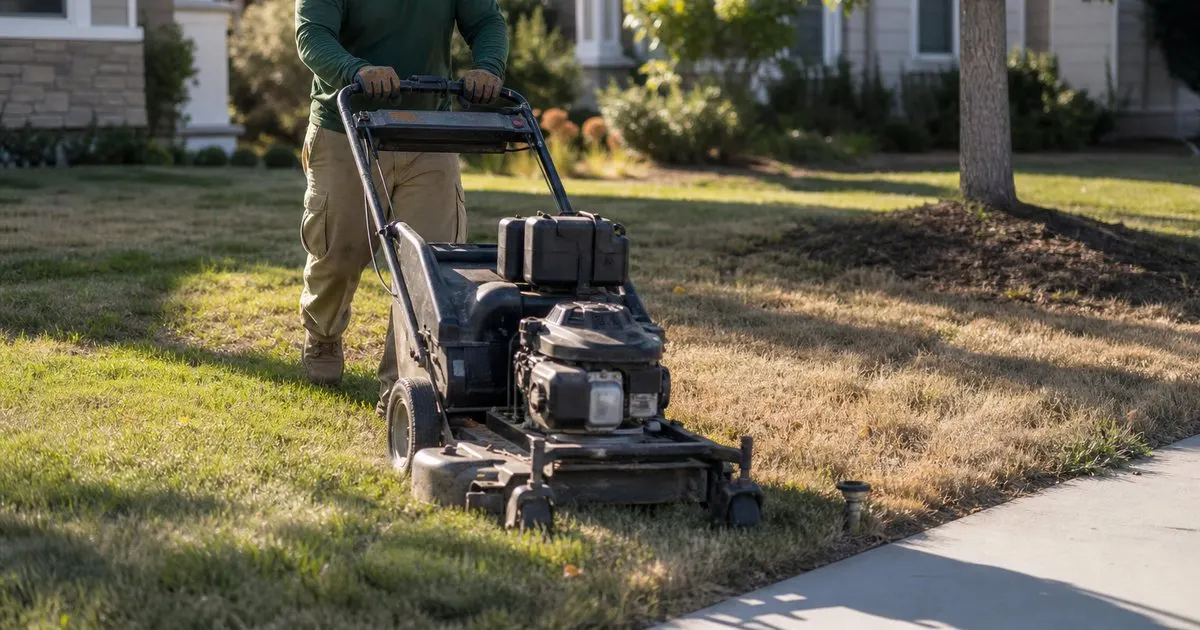
Let growth rate, not the calendar, decide the cadence
The one-third rule is the anchor. If a lawn grows so much in seven days that a weekly cut removes more than a third of the blade, it needs weekly service. When growth slows enough that a two-week interval still stays inside that rule, biweekly becomes reasonable. Across much of the US, cool season lawns hit that slowdown in the heat of mid to late summer and again as fall turns cold. Warm season lawns tend to slow as nights cool in early fall. Related: What is the best way to route a lawn crew across many properties?
Regional and site differences matter more than any generic date. An irrigated, fertilized lawn in a mild climate may never truly slow until frost. A non-irrigated lawn in a hot, dry July may nearly stop. The crew leader sees this before anyone else, so the practical trigger is a field observation: two consecutive visits where the stop was noticeably fast and the clippings were light. Related: Why does mowing height matter so much for a healthy summer lawn?
Keep reading: How often should you mow a residential lawn during peak growing season?, What is the best way to route a lawn crew across many properties?, Why does mowing height matter so much for a healthy summer lawn?. See how LawnCadence helps you recurring lawn care scheduling and crew routing.
Run the numbers on your route before you agree
Switching a customer to biweekly cuts their visits roughly in half but does not halve your cost to serve them. Drive time to the neighborhood is unchanged, and a biweekly stop often takes longer than a weekly one because there is more grass to cut and more trimming to catch up on. Many operators price biweekly visits higher per visit than weekly ones for exactly this reason, and it is worth explaining that plainly to the customer.
The route effect is the part people miss. If half the stops on a Tuesday route go biweekly on alternating weeks, the route becomes two different routes that each have lower density. The fix is to move biweekly customers within a neighborhood onto the same alternating week, so one week the crew runs the full route and the next they run a shorter version. That takes coordination, but it protects the drive-time economics.
Make the transition in a controlled window
Rather than switching customers one by one as they ask, pick a review point in the season and evaluate whole routes at once. Late July or early August is a common review point for cool season regions, and early to mid fall for warm season regions. Look at stop times, growth notes, and skip requests from the prior month, then propose cadence changes to customers who fit, with a clear price per visit and a return trigger for weekly service if growth picks back up.
Communicate it as a seasonal adjustment, not a downgrade. Customers respond well to a message like 'your lawn is growing slower right now, so we recommend every two weeks until it picks up again' because it signals that you are watching their property, not just running a calendar. Include the return trigger so nobody is surprised when weekly resumes after September rain. Related: When should you reschedule lawn service because of rain and wet grass?
Know when biweekly is the wrong call
Some lawns should stay weekly regardless of growth because of what else happens during the visit. Properties with heavy leaf drop, fast-growing edges along beds, or customers who care deeply about appearance are poor biweekly candidates. Properties where the crew handles irrigation checks or pest observations also benefit from weekly eyes on the turf. Related: How often should you mow a residential lawn during peak growing season?
Watch for the customer who asks for biweekly purely to save money while the lawn is still growing fast. Agreeing sets up a bad experience: a shaggy lawn, a scalped cut, and a complaint that the service looks worse. It is better to hold the cadence and adjust the price a little, or offer a lighter weekly visit with trimming every other week, than to let the lawn quality drop and take the blame for it.
- Move to biweekly when two weeks of growth still respects the one-third rule, not because a date arrived.
- Price biweekly visits higher per stop; more grass and the same drive time cost real money.
- Change cadence by route and neighborhood so alternating weeks stay dense.
- Keep visually demanding and high-maintenance properties on weekly even during slow growth.

Julien Jimenez
Julien Jimenez is an independent software builder based in Paris. He designs, ships, and operates focused SaaS products for small businesses and independent professionals. Read the full author page.
Keep Every Crew On Cadence
Recurring lawn care scheduling and crew routing. LawnCadence is built to help you put this into practice.
Start free trialMore from the LawnCadence blog
How often should you mow a residential lawn during peak growing season?
What is the best way to route a lawn crew across many properties?
Why does mowing height matter so much for a healthy summer lawn?
Get the LawnCadence playbook
Practical guides on lawn care software, straight to your inbox as we publish them. No spam, unsubscribe any time.