How much time should a crew leader budget for each residential mowing stop?
Realistic stop times are the foundation of a route that finishes on time. Here is how to estimate them, measure them, and keep them honest.
Start with the components, not a single number
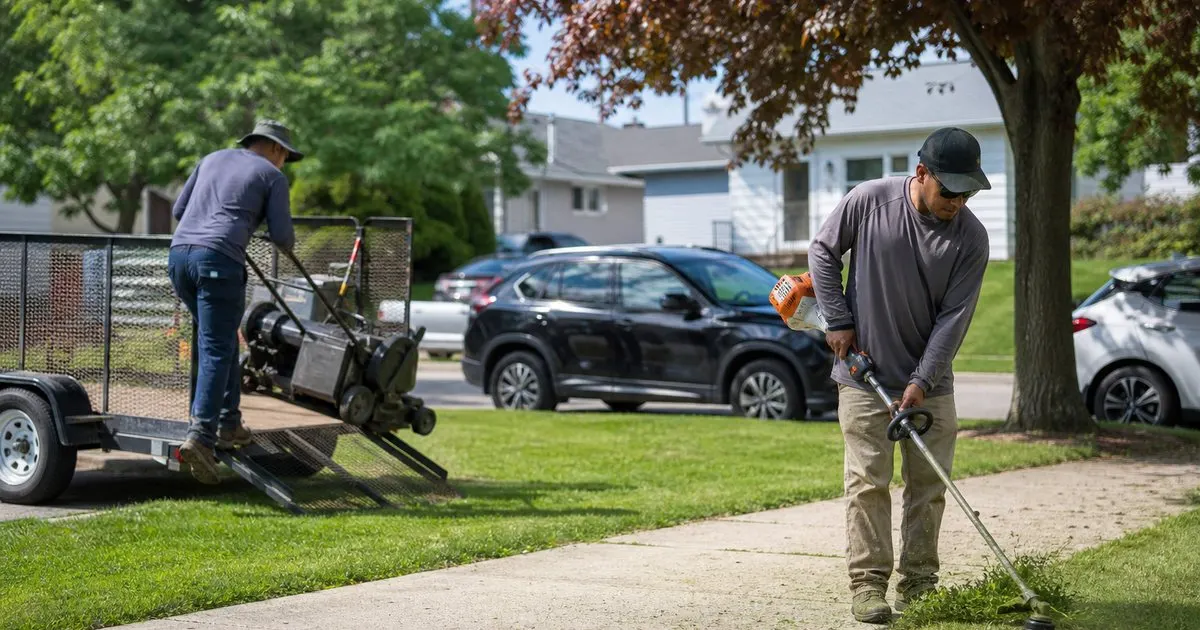
A stop is more than mowing. It includes unloading, the mow itself, trimming and edging, blowing off hard surfaces, a quick walk for debris or damage, and loading back up. For a typical quarter-acre suburban lot with a two-person crew and commercial equipment, the whole cycle often lands somewhere in the range of fifteen to thirty minutes, but the spread between an open, flat lot and a fenced, obstacle-heavy one is enormous. Related: How often should you mow a residential lawn during peak growing season?
Instead of guessing a flat number, build the estimate from what the property actually has: turf area, number of obstacles such as trees, beds, and play sets, linear feet of edging, gates that force a smaller mower, and slopes. A property with a narrow back gate that forces a walk-behind can easily double the mow portion compared with a lot that a zero-turn can cover in one clean pass pattern.
Keep reading: How often should you mow a residential lawn during peak growing season?, What is the best way to route a lawn crew across many properties?, Why does mowing height matter so much for a healthy summer lawn?. See how LawnCadence helps you recurring lawn care scheduling and crew routing.
Measure real stop times for at least a month
Estimates are hypotheses. The only way to know a property's real stop time is to record it, ideally with arrival and departure timestamps captured by the crew as part of the normal workflow, not reconstructed from memory at the end of the day. After four or five visits you have a reliable average, and the outliers tell you something, such as a long stop after a skipped week or a short one during drought.
Compare the measured time against the estimate used for pricing. It is common to find a handful of properties that take far longer than they were quoted, often because the walkthrough happened in spring before the beds filled in or because a fence was added later. Those properties are either underpriced or need a conversation about scope, and knowing which ones they are is worth more than any average.
Build the route with buffer, then protect it
Once stop times are known, add up the route and then add buffer for drive time between stops, fuel, dumping clippings if you bag, and the unexpected. A route planned to exactly fill the day will run late on any day with a breakdown, a locked gate, or a chatty customer. Many crew leaders plan to a target that leaves real margin in the afternoon and use it for catch-up or make-up visits when everything goes right. Related: What is the best way to route a lawn crew across many properties?
Order the stops so the longest, most physical properties happen earlier while the crew is fresh and the heat is lower, especially in summer. Keep the last few stops on the route small and flexible, so a late day only means the easy stops slide, not the demanding ones. This also gives the leader a clear decision point mid-afternoon: are we on pace, or do we call ahead and move a stop?
Use stop time as an ongoing signal
Stop time drifts. Turf thickens after fertilization, hedges grow into edging lines, a customer adds a play set, a new crew member is slower. Reviewing average stop time per property monthly catches these before they cost you a full route day. When a property's time climbs steadily, the answer is usually a scope adjustment or a price review at the next renewal. Related: How do you keep per property notes useful for every lawn crew member?
Stop time also reveals crew and equipment issues. If every property on a route is running longer than last year with no change on the ground, look at the mower deck, blade sharpness, and the trimming workflow. Dull blades and poor pass patterns add minutes at every stop, and across a season those minutes are the difference between finishing at three and finishing at six. Related: What should a lawn crew do when a property has changed since last visit?
- Estimate stop time from turf area, obstacles, gates, edging length, and slope, not a single flat number.
- Record real arrival and departure times and compare them against the quoted estimate.
- Plan the route with buffer and put demanding properties early while the crew is fresh.
- Review stop times monthly; a steady climb means the scope or the price needs a look.

Julien Jimenez
Julien Jimenez is an independent software builder based in Paris. He designs, ships, and operates focused SaaS products for small businesses and independent professionals. Read the full author page.
Keep Every Crew On Cadence
Recurring lawn care scheduling and crew routing. LawnCadence is built to help you put this into practice.
Start free trialMore from the LawnCadence blog
How often should you mow a residential lawn during peak growing season?
What is the best way to route a lawn crew across many properties?
Why does mowing height matter so much for a healthy summer lawn?
Get the LawnCadence playbook
Practical guides on lawn care software, straight to your inbox as we publish them. No spam, unsubscribe any time.