What should a lawn care owner do when a crew member calls out sick?
A call-out at six in the morning does not have to sink the day. Here is a triage order that keeps the most important stops on schedule.
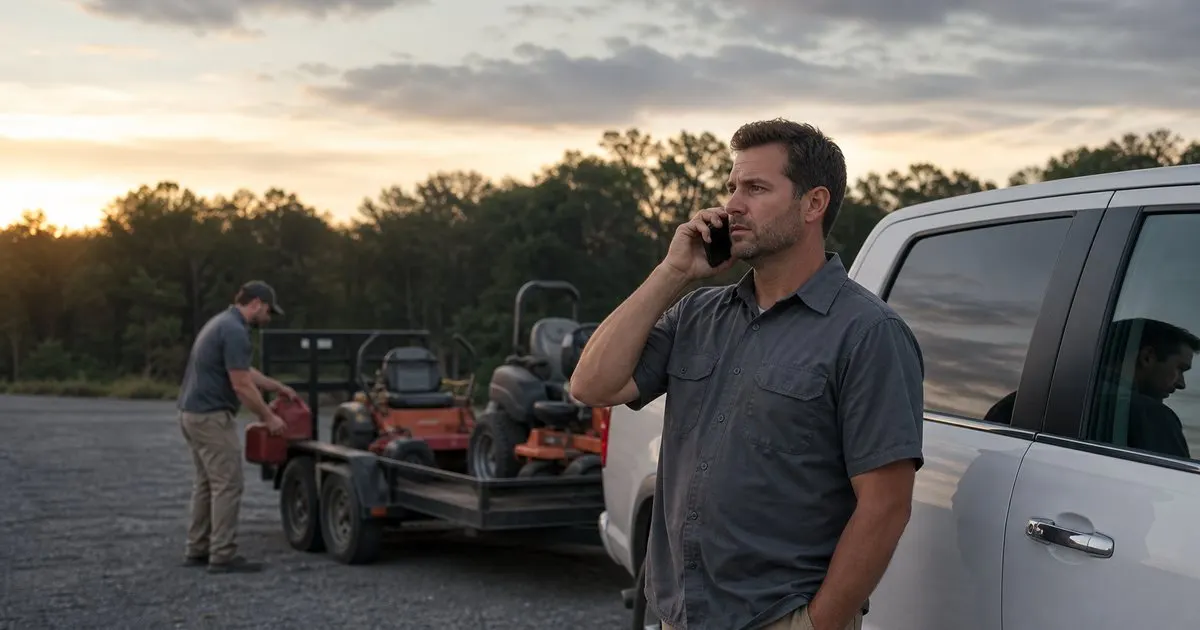
Decide in the first ten minutes whether the route runs short-handed
The first question is capacity, not blame. A two-person crew reduced to one can still run, but at a much lower pace, and a three-person crew reduced to two can often cover most of a route with a longer day. Look at the route's total planned time and ask what a smaller crew can finish before the end of a reasonable day. Be honest: a single operator with a trailer full of two-person equipment does not do half the route. They do less, because loading, trimming, and blowing all fall on one person. Related: What is the best way to route a lawn crew across many properties?
If you have a floating helper, a part-timer, or an office person who can trim and blow, this is the moment to call them. The goal is not to make the day perfect. It is to keep the crew's pace close enough to plan that only a few stops need to move. Owners who keep a prearranged list of who can be called on short notice, with pay and expectations settled in advance, make this decision calmly instead of scrambling.
Keep reading: How often should you mow a residential lawn during peak growing season?, What is the best way to route a lawn crew across many properties?, Why does mowing height matter so much for a healthy summer lawn?. See how LawnCadence helps you recurring lawn care scheduling and crew routing.
Triage the route by consequence, not by order
Once you know what capacity you have, reorder the route so the stops that matter most happen first. That usually means properties with a scheduled event, front lawns with strict appearance expectations from an HOA, customers who were already skipped or shifted recently, and any stop paired with a time-sensitive treatment. Stops that can slide a day with little consequence, such as low-visibility backyards or biweekly properties in a slow growth period, go last.
Do this on the route itself, not in your head. Moving stops around in a scheduling tool and letting the crew leader see the new order removes the constant phone calls that otherwise eat the morning. If a stop is being pushed to tomorrow, mark it clearly so it lands on tomorrow's route instead of vanishing until a customer calls to ask where you are.
Tell affected customers before they notice
A short message before the scheduled window works far better than an apology after it. Say the visit is moving, give the new day, and keep it simple. Customers rarely object to a one-day shift when they hear about it in advance. They object to silence. If the shift lands on a day with rain risk, say that too, so the plan does not look like it changed twice for no reason. Related: What should a lawn crew do when a property has changed since last visit?
Keep the message honest but light on detail. Something like 'we are down a crew member today and your visit will move to Wednesday' is plenty. Avoid promising a time window you may not hit with a short crew. If the tool you use can send that message from the route as you move the stop, the leader can do it without stopping to type each one by hand. Related: How do you keep per property notes useful for every lawn crew member?
Build the systems that make the next call-out boring
One call-out is a bad morning. Repeated call-outs with no plan are a business risk. The fixes are structural: keep a bench of part-time or on-call help, cross-train everyone so any crew member can lead a route, and keep enough buffer in each day that a short crew can still finish the core stops. A route that is planned to the last minute has no room for any of this. Related: How much should a lawn care business charge for a recurring mowing plan?
Record every call-out against the route and the day so patterns show up. If the same route is always the one that gets hit, it may be the hardest route, the earliest start, or the route with the least experienced leader. Solving that is more productive than reacting to each absence, and it keeps your best customers from being the ones who absorb the disruption every time.
- Decide within minutes whether a short crew can run the route or whether a backup needs to be called.
- Reorder the route by consequence so the stops that cannot slide happen first.
- Message affected customers before the scheduled window with a new day and no over-promises.
- Cross-train, keep an on-call bench, and plan routes with real buffer so call-outs stop being emergencies.

Julien Jimenez
Julien Jimenez is an independent software builder based in Paris. He designs, ships, and operates focused SaaS products for small businesses and independent professionals. Read the full author page.
Keep Every Crew On Cadence
Recurring lawn care scheduling and crew routing. LawnCadence is built to help you put this into practice.
Start free trialMore from the LawnCadence blog
How often should you mow a residential lawn during peak growing season?
What is the best way to route a lawn crew across many properties?
Why does mowing height matter so much for a healthy summer lawn?
Get the LawnCadence playbook
Practical guides on lawn care software, straight to your inbox as we publish them. No spam, unsubscribe any time.